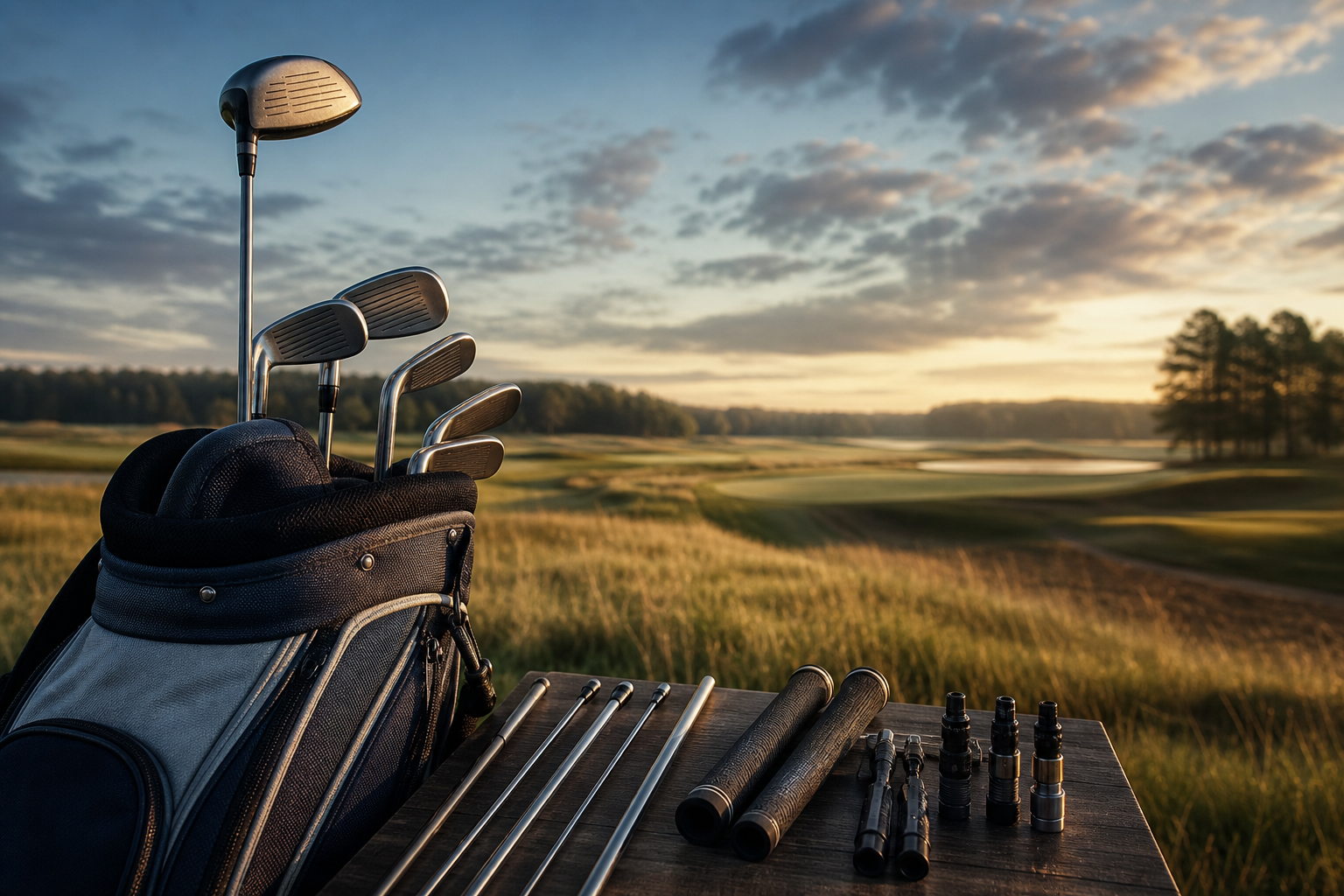
The game of golf is complex, and every nuance can affect your results. One of the most often overlooked, yet critically important, aspects is properly fitted golf equipment. Club fittings aren't just for professionals – they are essential for every golfer who wants to improve their performance. Latvia's changing weather conditions and specific course characteristics make this issue even more relevant. In this article, we will cover the main fitting parameters and how they impact your game.
Why are Fittings Important for Latvian Golfers?
Latvia's golf season is relatively short, and the weather can be very unpredictable. This means that every practice session and round of golf is valuable. Improperly fitted clubs can lead to compensatory movements, which not only worsen your shots but also increase the risk of injury. Imagine playing on chilly spring mornings or windy autumn evenings – a correctly fitted set of clubs will help you maintain control and accuracy regardless of the conditions. Furthermore, as courses can be wetter and grass thicker, the correct choice of lie and shaft becomes even more crucial.
1. Lie Angle: The Club's Sole Position
The lie angle is the angle between the club shaft and the ground when the club's sole is flat on the ground at impact. An incorrect lie angle is one of the most common sources of errors that can cause the ball to deviate left or right. If the toe of the club is raised, the ball will often go left (a hook). If the heel of the club is raised, the ball will go right (a slice).
On Latvian golf courses, where the grass can be lusher, a correct lie angle helps the club glide better through the turf, reducing the risk of "digging" into the ground or hitting "fat" shots. A professional fitter will measure your impact using a special board or color on the club's sole to determine the ideal angle for your individual swing.
2. Shaft Flex: Power and Control
Shaft flex is one of the most critical fitting parameters, affecting both shot distance and accuracy. The main flex categories are Senior (A), Ladies (L), Regular (R), Stiff (S), and Extra Stiff (X). The choice depends on your swing speed:
- Slower swing speed (up to 75 mph): L, A/M (Senior) shafts. These shafts help achieve greater ball speed and launch angle.
- Medium swing speed (75-90 mph): R (Regular) shafts. The most common flex, suitable for most amateur golfers.
- Fast swing speed (90-105 mph): S (Stiff) shafts. Provides better control for faster swings.
- Very fast swing speed (above 105 mph): X (Extra Stiff) shafts. Designed for professionals and strong amateurs.
Incorrect flex can lead to inconsistencies in shots – a shaft that is too soft can cause the ball to go left (hook), while one that is too stiff can cause it to go right (slice). In Latvia's windy conditions, a correctly chosen shaft will help maintain a controlled ball trajectory, preventing the wind from pushing it off course.
3. Club Length: Distance to the Ball
Club length affects your posture, swing plane, and shot accuracy. A club that is too long can cause you to stand too far from the ball, leading to toe shots. A club that is too short will make you bend too low, resulting in heel shots.
Club length is determined by your height and the distance from your wrist to the ground. A professional fitter will use specific measurements to determine the optimal length for each club in your set. This is especially important for irons, where each club has a different length. Precise length will ensure consistent posture and swing plane, which are fundamental for good shots.
4. Grip Size: Feel and Control in Your Hands
Grip size is an often underestimated but extremely important fitting element. An incorrectly sized grip can create tension in your hands and forearms, affecting your ability to properly hold and control the club during the swing.
- Grip too large: May prevent you from fully closing your hands around the club, reducing wrist action and making it difficult to square the clubface at impact. This often leads to a slice.
- Grip too small: May cause you to grip the club too tightly, creating tension and promoting overly active wrist action, which can lead to a hook.
A professional fitter will assess your hand size and finger length to recommend the most appropriate grip size. The correct grip provides comfort, reduces tension, and promotes better club control, which is especially important when playing with wet hands or a glove in Latvian conditions.
Conclusion: Don't Skip a Professional Fitting
Golf club fittings are not a luxury but an investment in your game. Whether you are a beginner or an experienced player, a professional fitting process will help you find equipment that matches your unique physical characteristics and swing mechanics. Especially on Latvian golf courses, where changing conditions demand attention to every detail, correctly fitted clubs can be crucial for your success and enjoyment of the game. Visit your local golf pro shop or fitting center and let the experts help you reach your full potential on the course!